
Search Delaware Obituary Records
Delaware obituary records cover deaths across New Castle, Kent, and Sussex counties. The Delaware Division of Public Health, the Delaware Public Archives, and the state court system all hold pieces of the record. You can look up death notices, locate burial sites, and order a certified death certificate online or by mail. Most obituaries sit in local papers and library files. Related vital records become public after 40 years under state law. This page walks you through the main Delaware obituary sources, shows how to request each type, and points you to the offices that keep this data across all three counties.
Delaware Obituary Records Overview
Where to Find Delaware Obituary Records
Delaware obituary records live in a few places at once. Newspapers print the death notices that families submit. Funeral homes keep their own copies of those notices for years. The Delaware Office of Vital Statistics holds the official death certificates for every death in the state since 1913. The Delaware Public Archives takes over once a death record turns 40 years old and makes it open to anyone doing family research.
For a recent death, the fastest path to an obituary is a local paper or a funeral home site. For older deaths, the Delaware Public Archives has microfilmed death records dating back over a century. Before 1913, each county's Recorder of Deeds logged births, deaths, and marriages. Those old books sit in the Archives today. Staff can help you find the right microfilm roll or manuscript file.
The lead-in photo below shows the Delaware Office of Vital Statistics page, where death certificates are issued for every Delaware obituary filed since state record keeping began. The Delaware Division of Public Health Office of Vital Statistics is the main portal for modern death records.
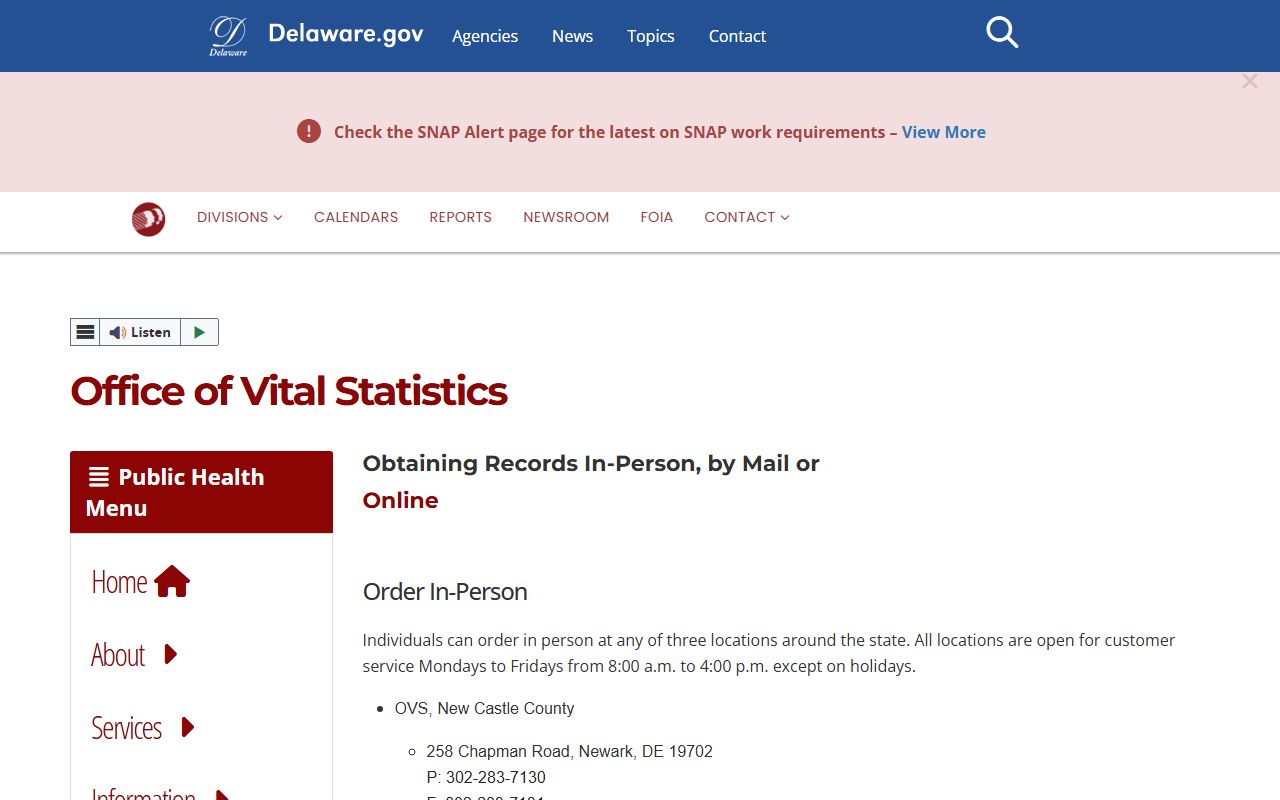
The office sits inside the Division of Public Health under the Department of Health and Social Services. It charges $25 per certificate, takes mail and in-person orders, and runs three offices across Delaware.
Note: A Delaware death certificate holds the formal facts of a death, while the obituary in the paper tells the person's story.
Delaware Public Archives and Historical Obituaries
The Delaware Public Archives is the go-to place for obituary and death records older than 40 years. The collection includes Bureau of Vital Statistics microfilm, genealogical abstracts, newspaper clippings, cemetery records, and tombstone inscriptions. The Guide to Vital Statistics Records explains what is available and how to order copies.
Here is the Archives guide page itself. It lays out the record types and the age rules for public access.
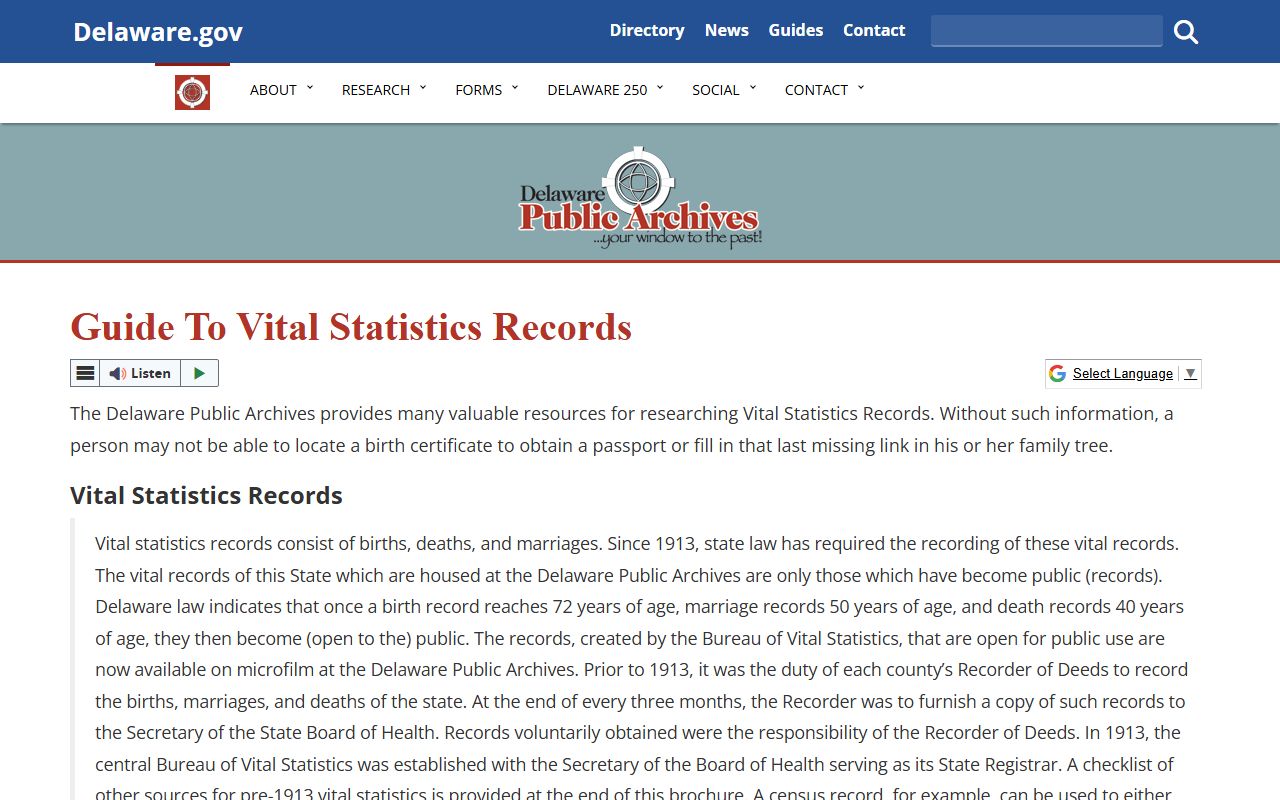
Birth records open after 72 years. Death records open after 40 years. Marriage records open after 50 years. Before 1913, the county Recorder of Deeds kept the records. The Archives staff can point you to the right roll, though most holdings are not fully indexed. You may need to search on site with a patron login.
The Archives charges $10 for up to ten pages of copies, with $5 added per extra ten pages. Certified copies run $25. You can email requests to archives@delaware.gov or send them by mail. Each written request is limited to five pieces of information, so keep your ask clear. The Archives also holds probate records, orphans' court files, tax lists, cemetery books, and family bible entries that often help confirm details in an old obituary.
How to Search Delaware Obituary Records Online
Several online tools help you search Delaware obituaries and death records. Some are free. Others charge a fee for certified copies. Here is how the main options work.
VitalChek is the state's main online partner for ordering death certificates and related vital records. You can order a Delaware death certificate from any computer. The site accepts Visa, MasterCard, Discover, and American Express. A processing fee applies on top of the $25 state fee.

You can reach VitalChek for Delaware online or by phone at 1-877-888-0248. The company has worked with state agencies for more than 35 years and processes over 4 million vital documents each year. It follows full PCI security standards to keep applicant data safe.
For older deaths, try the Delaware Public Archives site and the newspaper files held by local libraries. Obituaries from the Wilmington News Journal, the Delaware State News, and other papers across New Castle, Kent, and Sussex counties are often kept in the library's microfilm room.
Court cases tied to a death can also help confirm obituary details. Probate cases, estate filings, and guardianship matters all create records that can fill gaps in a family history search. The Delaware courts run an online portal for these cases.
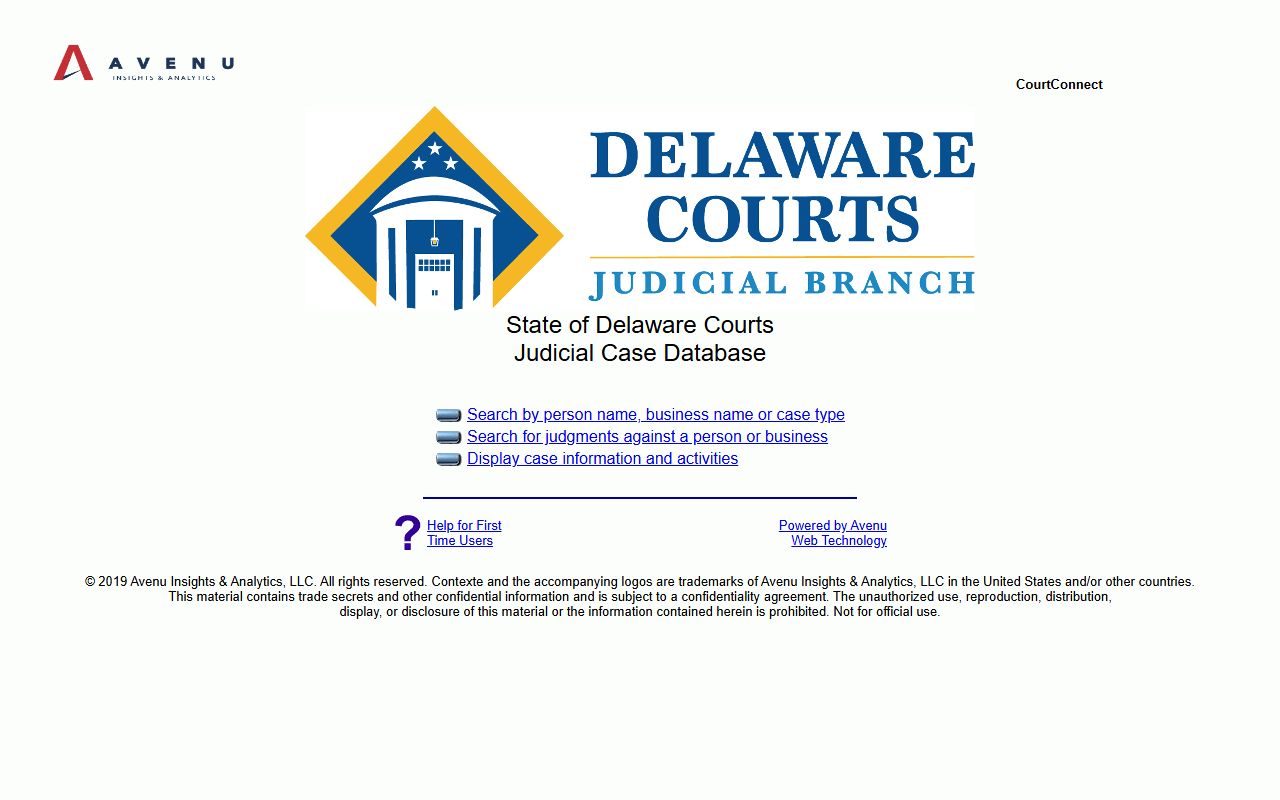
Visit CourtConnect to search by party name, case number, or business name. The system covers the Court of Chancery, Superior Court, Family Court, Court of Common Pleas, and the Justice of the Peace Courts. Case files can be viewed online at the basic level, and the courthouse has the full files if you need paper copies.
Useful fields to have on hand when you search:
- Full legal name of the deceased
- Approximate date of death
- County where the death took place
- Name of the spouse or next of kin
- Place of burial if known
FOIA Requests for Delaware Obituary Information
The Delaware Freedom of Information Act gives the public the right to see government records. It is codified at Title 29, Chapter 100 of the Delaware Code. The law applies to state agencies, county offices, and city halls that hold records tied to deaths, funerals, and obituary filings. Records older than the public age limits can be pulled from the state Archives, but many modern files still need a FOIA request.
The Delaware Attorney General's Office oversees FOIA. The page below links to the AG opinions that explain how the law applies to specific cases.
The AG has issued many opinions over the years on how agencies must handle FOIA requests. If a request is denied, a petition goes to the AG within 60 days. The AG has 20 days to decide. If a violation is found, the requester may file suit in Superior Court or ask the AG to do so.
The statute itself is online on the Delaware legislature site. The screenshot below shows Title 29, Chapter 100 in full.
Under 29 Del. C. §§ 10001-10006, a public body has 15 business days to respond to a FOIA request. That answer can be the records, a denial with reasons, or a note that more time is needed. The statute lists the exemptions that can shield a record, including personnel files, pending litigation files, and some police investigation material. Death certificates themselves are not a FOIA item; they fall under the vital records law and the 40-year rule.
Delaware Counties and Obituary Services
Delaware has only three counties. Each one has a regional Office of Vital Statistics, a Clerk of the Peace for marriage records, and a Recorder of Deeds for property and pre-1913 vital books. These county offices support any Delaware obituary search that reaches beyond a basic death notice.
The New Castle County Office of Vital Statistics sits at 258 Chapman Road in Newark. The Kent County central office is at 417 Federal Street in Dover. The Sussex County office is at 546 South Bedford Street in Georgetown. All three are open Monday through Friday, 8 a.m. to 4 p.m. They all charge the same $25 per certificate. A visitor can walk in, fill out the form, and usually leave with the record the same day.
The New Castle County Recorder of Deeds keeps older vital records and deed books. Kent County has its own online land records system on the i2g platform, which also holds pre-1913 vital books.
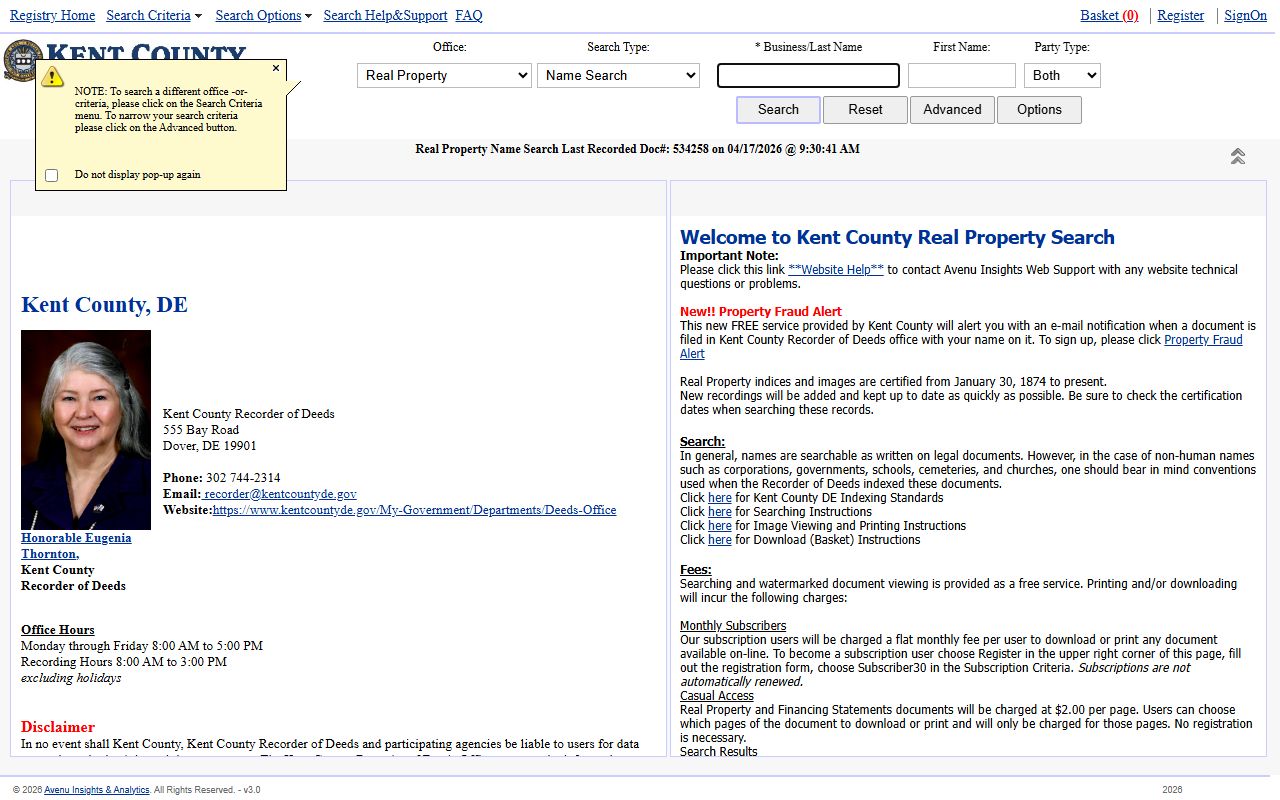
You can search Kent County land records back to January 1874. The Sussex County Recorder of Deeds has its own portal at sussexcountyde.gov. These property books often list the date of death when a deed transferred after someone died, which can be a handy backup when a Delaware obituary is thin on detail.
Note: Each Delaware county has its own Clerk of the Peace office that issued the marriage license, and that license helps link a spouse's name on an older obituary.
Fees for Obituary and Death Records
A certified Delaware death certificate costs $25. That is the state fee set by the Office of Vital Statistics. Payment can be cash, check, money order, or credit card, depending on the office. Add a small processing fee if you order through VitalChek. Add a service fee if you use GoCertificates. Mail-in orders use a check or money order made out to the Office of Vital Statistics.
Delaware Public Archives copies cost $10 for up to ten pages. Each extra set of ten pages is $5 more. Certified archive copies run $25. Self-service microfilm prints cost 50 cents per page. Bring pencils if you are taking notes. Pens are not allowed near the original manuscripts.
FOIA copies are subject to their own schedule. The first 20 pages of black-and-white copies are free under Delaware law. Each extra page costs 10 cents. Labor fees apply only when a search runs long. The agency must give you an estimate before it starts work on large requests.
Are Delaware Obituaries Public
Yes. Obituaries are submitted to newspapers by families, so they are public by design. Death certificates become public after 40 years. Before that, a certified copy goes only to the next of kin, the spouse, a child, a parent, or a legal agent. You can view older death records at the Delaware Public Archives without any proof of relation. Some files may still have a privacy note if the case involves a minor or a sealed court matter.
Most families post a death notice in a local paper, which is then indexed by online obituary sites. Funeral home websites carry the same notices and often host guest books. Delaware law does not limit who can read these public notices.
Most Delaware obituary material is open to the public. Files under 40 years old follow tighter rules through the Office of Vital Statistics.
Browse Delaware Obituaries by County
Each Delaware county has its own set of local offices and hospital records. Pick a county below to see where to find death notices, death certificates, and other obituary records for that area.
Obituary Records in Major Delaware Cities
Delaware cities keep their own public records, but a death certificate still goes through the state office. Pick a city below to find the local office, the county tie, and the hospital that files the death record.